
Workforce Development and Employment Initiative

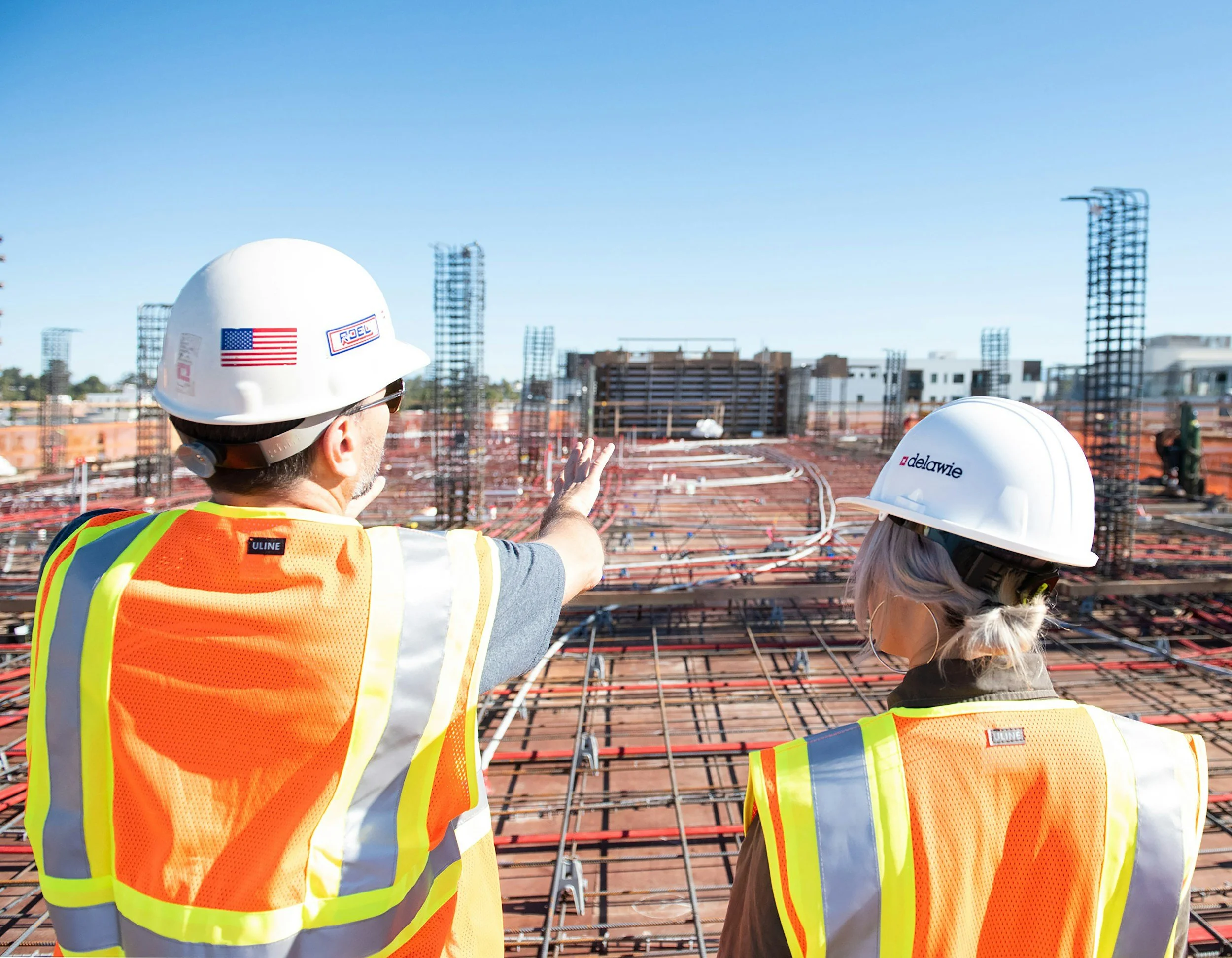


Workforce Development Model
Restoration Hall is a registered pre-apprenticeship provider with the State of Ohio, positioning the organization to deliver workforce training aligned with recognized apprenticeship pathways and employer demand. The program connects participants with recognized training pathways and career opportunities through partnerships with trade unions, Belmont College, and OhioMeansJobs.
This designation ensures that participants are receiving training that meets established standards and connects directly to formal apprenticeship and employment opportunities. This recognition reinforces. Restoration Hall’s role as a legitimate workforce development provider.
Restoration Hall delivers a structured workforce development model designed to provide participants with practical skills, real-world experience, and a direct pathway to employment. The program integrates training, daily operations, and career progression within a single system to eliminate barriers and improve outcomes.
I. Project Overview
Restoration Hall Inc. is developing a comprehensive Workforce Development and Community Revitalization Initiative designed to address workforce shortages, economic instability, and barriers to employment throughout the Ohio Valley region.
Located in Bellaire, Ohio, Restoration Hall is redeveloping the historic Rose Hill School building into a multi-service workforce development campus that integrates workforce training, entrepreneurship education, transitional housing, childcare services, and community support programs under one roof.
Unlike traditional workforce programs that focus only on job placement, Restoration Hall’s model is designed to address the full range of barriers that prevent individuals from achieving long-term economic stability. Participants entering Restoration Hall gain access to structured training pathways, supportive services, and career opportunities that lead to sustainable employment, business ownership, and housing stability.
Through partnerships with local unions, educational institutions, workforce agencies, and industry leaders, Restoration Hall is building a workforce development ecosystem that connects individuals directly to in-demand career opportunities in the skilled trades, entrepreneurship, and emerging industries.
Participants entering Restoration Hall follow a structured pathway that includes career exploration, skills training, financial literacy education, and employment preparation. Individuals may pursue multiple pathways depending on their interests and career goals, including pre-apprenticeship training programs designed to prepare participants for union apprenticeship opportunities in the construction trades, or entrepreneurship training programs designed to help participants launch and grow small businesses.
This integrated model ensures that individuals not only gain employment, but also develop the financial stability and long-term opportunities necessary to rebuild their lives and strengthen their communities.
II. Program Model
The Restoration Hall program model is built around a structured pipeline designed to move individuals from instability to long-term economic independence.
Participants enter the program through Restoration Hall’s intake and stabilization services, where they receive career counseling, workforce readiness training, and access to supportive services such as housing assistance, childcare, and mentoring.
After completing career exploration and foundational training, participants reach a critical decision point where they may pursue one of two primary pathways:
Skilled Trades Workforce Pathway
Participants interested in careers in the construction industry enroll in Restoration Hall’s pre-apprenticeship training program. This program prepares individuals to meet entry requirements for union apprenticeship programs by providing instruction in construction fundamentals, OSHA safety training, mathematics preparation, tool usage, and industry expectations.
Graduates of the pre-apprenticeship program are connected with apprenticeship opportunities through partnerships with regional labor organizations and training programs.
Entrepreneurship and Business Development Pathway
Participants interested in starting their own businesses may enroll in Restoration Hall’s entrepreneurship training program. This curriculum includes financial literacy, business planning, regulatory compliance, marketing strategies, and guidance on how to pursue contracting opportunities, including doing business with government agencies.
Participants pursuing this pathway may develop businesses in areas such as construction services, culinary arts, personal care services, childcare, health and fitness, or creative arts.
Both pathways ultimately lead to employment, business ownership, or self-employment opportunities.
III. Housing and Community Revitalization Component
A key component of Restoration Hall’s model is the integration of workforce development with housing stability and community revitalization.
Restoration Hall and its development partner are actively renovating residential properties that will be used to provide workforce housing opportunities for program participants. Individuals who secure stable employment through Restoration Hall’s workforce programs may qualify to rent these properties while rebuilding their financial stability and improving their credit.
As participants progress financially, they may transition from renting to homeownership by purchasing these properties through traditional mortgage financing.
Proceeds from property sales are reinvested into acquiring and renovating additional homes, creating a self-sustaining housing cycle that expands affordable housing opportunities while promoting neighborhood revitalization.
IV. Long-Term Vision
Restoration Hall’s long-term vision is to create a sustainable workforce development ecosystem that strengthens the regional economy while helping individuals rebuild stable, productive lives.
By integrating workforce training, entrepreneurship education, financial literacy, and housing pathways within a single coordinated system, Restoration Hall seeks to create a replicable model for community revitalization that can serve as a blueprint for other communities facing similar economic challenges.
Through collaboration with industry partners, labor organizations, educational institutions, and community stakeholders, Restoration Hall is working to build stronger workforce pipelines, expand economic opportunity, and restore long-term stability to the communities of the Ohio Valley.
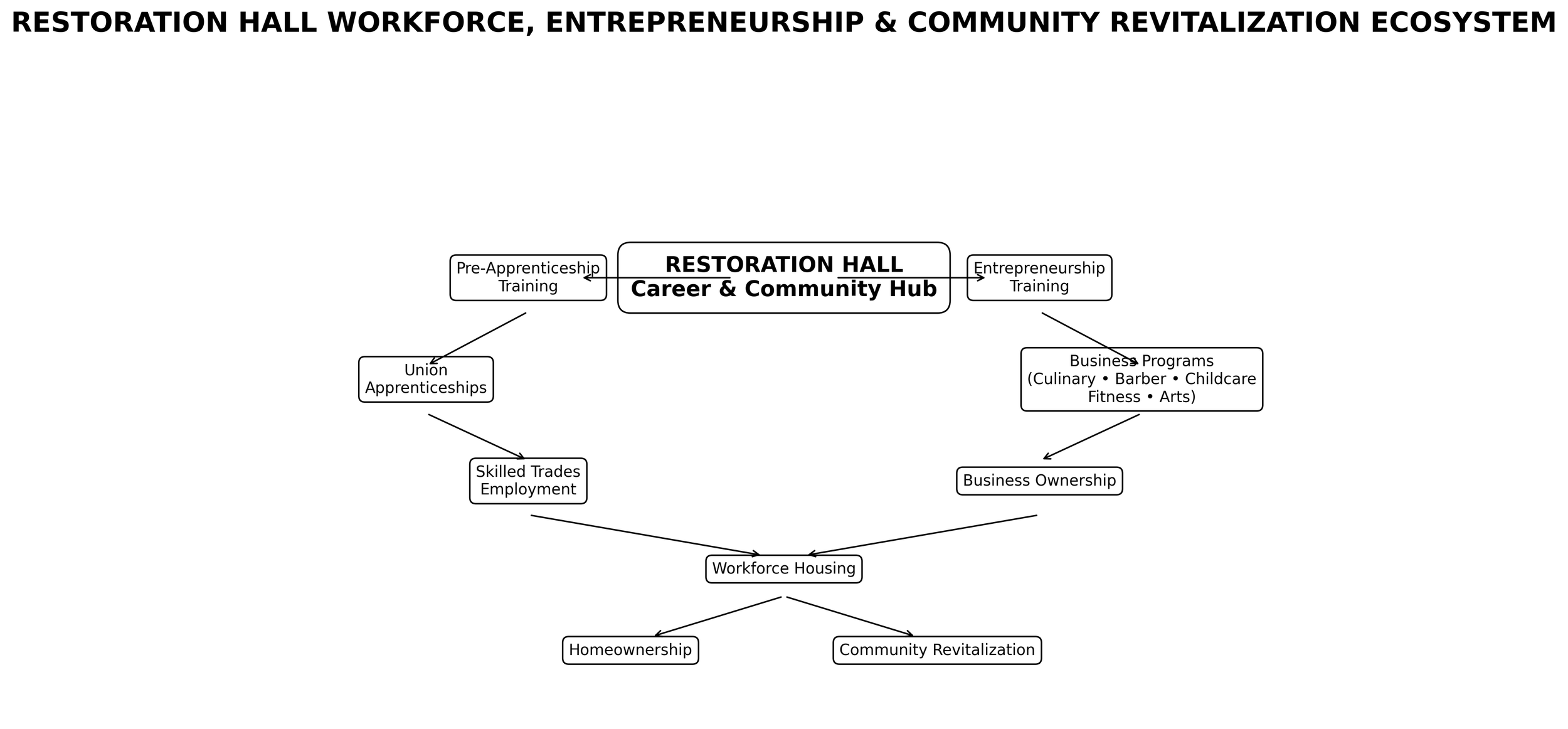
The Restoration Hall Workforce Ecosystem
The diagram below illustrates how Restoration Hall integrates workforce training, entrepreneurship development, and housing pathways to create long-term economic mobility for participants.
V. Regional Workforce Innovation Model
Restoration Hall serves as a regional workforce innovation hub for the Ohio Valley by aligning workforce training, apprenticeship pathways, entrepreneurship development, and workforce housing within one coordinated system in the Ohio Valley by aligning workforce development, industry demand, housing stability, and entrepreneurship opportunities within a single coordinated system.
Many communities across the Ohio Valley continue to experience persistent workforce shortages in critical industries such as construction, manufacturing, healthcare support services, and skilled trades. At the same time, many individuals face barriers to employment due to limited access to training, transportation challenges, childcare needs, housing instability, and lack of professional networks.
Restoration Hall’s Workforce Development Initiative addresses these challenges by bringing multiple workforce partners together under one collaborative model. The program works closely with regional labor organizations, workforce development agencies, community colleges, and local employers to ensure that training programs align directly with industry needs.
Through partnerships with organizations such as OhioMeansJobs, regional apprenticeship programs, and local educational institutions including Belmont College and West Virginia Northern Community College, Restoration Hall is helping create stronger workforce pipelines that connect individuals to sustainable career opportunities.
The program’s advisory council further strengthens this model by bringing together leaders from workforce agencies, labor organizations, financial institutions, educational institutions, and industry partners who provide guidance on training standards, labor market demand, and economic development strategies.
By integrating workforce preparation with housing stability and entrepreneurship education, Restoration Hall is developing a comprehensive approach to economic mobility that helps individuals transition from unemployment or instability to long-term career success and homeownership.
This coordinated model not only strengthens individual outcomes but also supports regional economic growth by helping employers access a reliable pipeline of trained workers.
Understanding Labor Unions & Career Pathways
Labor unions play a vital role in providing structured training, fair wages, benefits, and long-term .. Many skilled trade careers begin through union-affiliated apprenticeship and training programs. This short video explains what labor unions are and how they support workers entering the trades.
HVRP Success video from the U.S. Department of Labor (DOL VETS)
The Homeless Veterans’ Reintegration Program (HVRP), administered by the U.S. Department of Labor Veterans’ Employment and Training Service, helps veterans overcome barriers to employment and transition into meaningful careers. Restoration Hall Inc. aligns with this mission by connecting veterans in our region to training, employment, and supportive services.
Workforce Advisory Council
Restoration Hall is establishing a Workforce Advisory Council to guide the development of training programs and ensure alignment with regional labor market demand.
The council will include representatives from:
• workforce development agencies such as OhioMeansJobs
• regional labor organizations including the International Brotherhood of Electrical Workers and regional carpenter apprenticeship programs
• higher education partners such as Belmont College and West Virginia Northern Community College
• local contractors and small business leaders
• financial institutions supporting workforce housing initiatives
The advisory council provides strategic guidance on training standards, apprenticeship pipelines, industry demand, and workforce development strategies to ensure that Restoration Hall’s programs produce career pathways aligned with regional economic needs.
VETERAN EMPLOYMENT & TRANSITIONAL SUPPORT OPPORTUNITY
RESTORATION HALL INC.
Restoration Hall Inc. is currently recruiting veterans who are ready to work and seeking a new career path.
Who This Is For
- Unemployed or underemployed veterans
- Veterans at risk of losing employment
- Veterans seeking a career change
- Veterans recently released from incarceration
Veterans of all ages and experience levels are encouraged to apply.
Career Opportunities
Restoration Hall partners with local trade unions and workforce partners to connect veterans to skilled trade careers.
✅ No experience required ✅ Training provided ✅ Career-focused employment
Skilled Trades & Career Pathways May Include
Electrical • Carpentry • Laborers • Operating Engineers • Plumbing & Pipefitting • Ironworkers • Other construction and building trades
Trade opportunities vary based on availability and partner intake schedules.
Supportive Services
Employment-focused coordination, reentry and employment barrier navigation, employer and union connections,
and temporary transitional housing assistance when appropriate and available.
Employment services are primary; housing support is limited.
How to Get Started
Restoration Hall Inc.
📞 740-444-4045
✉️ lnrd@restorationhall.org
🌐 www.restorationhall.org
Referrals from the Belmont County Veterans Service Office and community partners are welcome.
Interested in Partnering with Restoration Hall? Contact Us.